
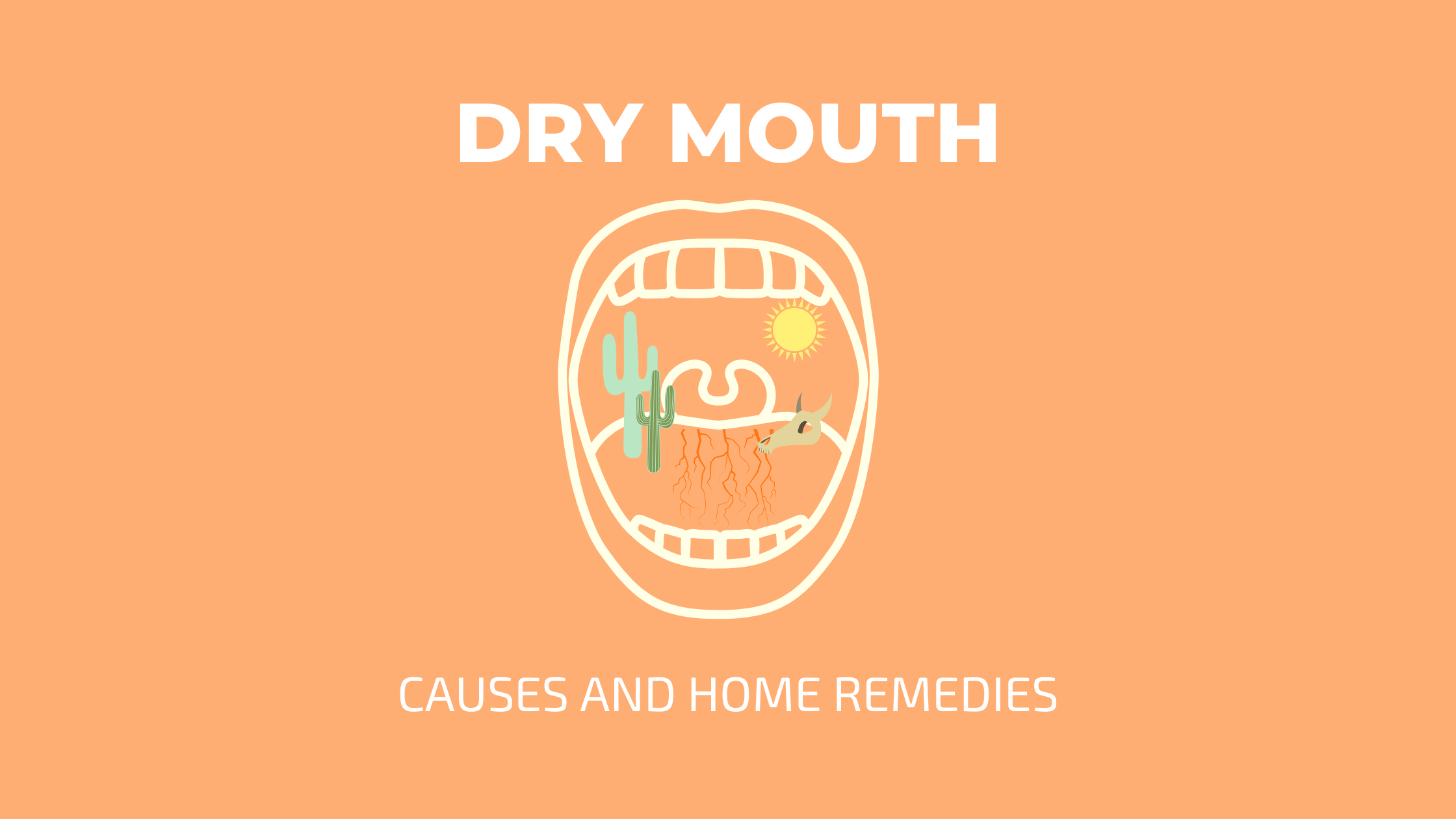
Why Does My Mouth Feel Dry? Causes, Symptoms, and What Actually Helps
If your mouth feels dry, sticky, or sore, you're not imagining it.
Dry mouth (the medical term is xerostomia) happens when your salivary glands stop making enough saliva. It's uncomfortable, but it's also very common, and most cases can be eased.
Here's what causes it, and what actually helps.
Why saliva matters more than you'd think
Saliva does a lot of quiet work.
It moistens food so you can chew and swallow. It helps you taste. It contains minerals that protect your teeth from decay [1].
When saliva drops, all of that protection drops too.
That's why dry mouth can lead to more than just discomfort. It can cause mouth sores, cracked lips, a burning tongue, and gum irritation. In severe cases, it can make speaking or swallowing difficult. If you wear dentures, it can make them harder to keep in place.
What causes dry mouth?
There's rarely just one cause. Here are the most common ones.
Aging
Older adults are more likely to take medications that list dry mouth as a side effect.
Medications
Many prescription and over-the-counter drugs can reduce saliva flow. This includes treatments for depression, anxiety, pain, allergies, and nausea.
Cancer treatment
Chemotherapy and radiation to the head and neck can damage the glands or nerves that control saliva.
Health conditions
Sjögren's disease, diabetes, autoimmune disorders, and chronic stress are all linked to dry mouth.
Nerve damage
Injury or surgery near the head and neck can permanently affect saliva production.
Mouth breathing and snoring
Breathing through your mouth at night dries out your tissue. It's also a common cause of morning bad breath.
Tobacco and alcohol
Smoking, chewing tobacco, and alcoholic drinks all dry the mouth. So does alcohol-based mouthwash. An alcohol-free rinse is the gentler choice.
Sodium lauryl sulfate (SLS)
This is the foaming detergent in most toothpaste. Clinical studies have shown it can irritate and strip the lining of your mouth. In one study, a toothpaste with 1.5% SLS caused visible irritation in 60% of people, while an SLS-free version caused none [2]. A separate study found the same pattern [3]. A 2022 research review reached a similar conclusion [4].
Mint and menthol
This one catches people off guard.
Menthol is what gives toothpaste and mouthwash that cooling, "minty" feeling. It works by activating a nerve receptor called TRPM8.
But at the levels used in most oral care products, menthol also activates a second receptor, TRPA1. That one isn't linked to cooling. It's linked to tingling, burning, and stinging [5][6].
If your mouth is already dry or irritated, that extra stimulation can make it feel worse, not better.
Menthol isn't proven to reduce saliva the way alcohol or SLS can. But if mint stings instead of feels refreshing, that's a sign your mouth is already sensitive. A flavor-free toothpaste is worth trying.
Common dry mouth symptoms
- A sticky or cotton-mouth feeling
- Dry throat, or trouble tasting or speaking
- Bad breath
- Trouble swallowing
- Changes in taste
- More cavities than usual
- Sensitive or irritated gums
- Mouth sores or cracked lips
What helps with dry mouth
The best fix depends on the cause. So if dry mouth is ongoing, it's worth mentioning to your dentist or doctor.
In the meantime, these steps help most people.
Ask about your medications
If a prescription is the cause, your doctor may have an alternative that's gentler on saliva.
Sip water throughout the day
A little, often, works better than a lot at once.
Try a xylitol breath spray, mint, or sugar-free gum
Chewing and sucking stimulate saliva flow [7][8]. Xylitol has the bonus of not feeding the bacteria that cause cavities.
Add moisture to the air
A humidifier helps, especially overnight.
Breathe through your nose, not your mouth
If that's hard for you, ask your dentist why.
Go easy on antihistamines and decongestants
Unless a doctor recommends them. Both commonly make dry mouth worse.
Ask about an artificial saliva product
For more persistent dryness, a dentist or doctor may prescribe pilocarpine or cevimeline. These stimulate your glands directly. They're effective, but come with side effects, so they're usually reserved for more significant cases [9][10].
Brush with a flavor-free, SLS-free toothpaste that has xylitol
This avoids stacking two more irritants (detergent and mint) on top of dryness you already have.
Keep up with dental cleanings
Dry mouth raises your risk of decay and gum disease. Regular visits matter more, not less.
Cut back on tobacco, alcohol, and caffeine
All three dry out your mouth.
Frequently asked questions
Can mint toothpaste actually make dry mouth worse?
Yes, for some people. Menthol cools, but it can also trigger nerve pathways linked to burning and stinging [5][6]. In a mouth that's already dry or sore, that irritation often feels stronger. If mint stings rather than refreshes, try a flavor-free product.
Is SLS-free toothpaste better for dry mouth?
For many people, yes. SLS is a detergent shown in clinical studies to irritate the lining of the mouth [2][3][4]. Going SLS-free removes one source of irritation. It won't fix dry mouth caused by medication or a health condition, though.
Does xylitol really help with dry mouth?
Chewing or sucking on anything stimulates saliva, and xylitol adds the benefit of not feeding decay-causing bacteria [7][8]. It's a helpful daily habit, not a cure.
When should I see a dentist or doctor about dry mouth?
If it's ongoing, especially with mouth sores, trouble swallowing, or a new medication, bring it up with a professional. Dry mouth is a symptom. Finding the cause works better than just managing the symptom.
A flavor-free, SLS-free routine won't fix every cause of dry mouth. But it removes two common irritants, so your mouth has one less thing working against it.
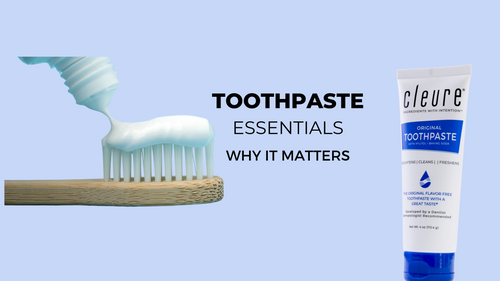
Cleure's toothpaste and oral care line are fragrance-free, flavor-free, and SLS-free, with xylitol, for exactly this reason.
References
- National Institute of Dental and Craniofacial Research. "Dry Mouth." nidcr.nih.gov/health-info/dry-mouth
- Desquamative effect of sodium lauryl sulfate on oral mucosa: a preliminary study. PubMed PMID 8451922.
- The effects of two sodium lauryl sulphate-containing toothpastes with and without betaine on human oral mucosa in vivo. PubMed PMID 12704946.
- Side effects of sodium lauryl sulfate applied in toothpastes: a scoping review. PubMed PMID 35506963.
- Self- and cross-desensitization of oral irritation by menthol and cinnamaldehyde via peripheral interactions at trigeminal sensory neurons. PMC3020390.
- Determination of the optimal dose and dosing strategy for effective l-menthol oral rinsing. PMC11889024.
- Effects of xylitol and CPP-ACP chewing gum on salivary properties. PMC8543994.
- Comparative evaluation of the effects of CPP-ACP and xylitol-containing chewing gum on salivary flow rate. PubMed PMID 28914246.
- Treatment alternatives for dry mouth: a scoping review. PMC9617261.
- Pilocarpine for Sjögren's Syndrome-Induced Dry Mouth and Dry Eyes: A Review of Clinical Effectiveness. NCBI Bookshelf NBK562832.

%20happens%20when%20your%20salivary%20glands%20stop%20making%20enough%20saliva.%20It's%20uncomfortable,%20but%20it...)
Leave a comment
This site is protected by hCaptcha and the hCaptcha Privacy Policy and Terms of Service apply.