
Skin condition guide
Dandruff: Understanding Your Skin
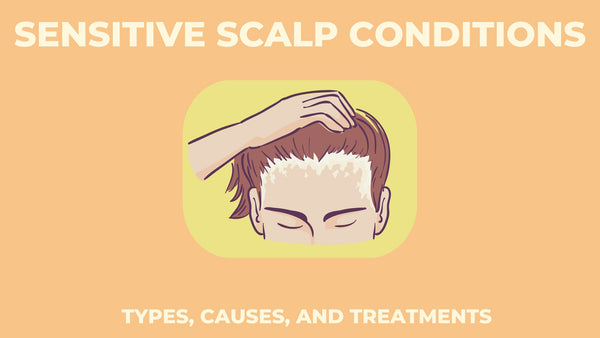
Dandruff causes white or yellow flakes and an itchy scalp. It's linked to a common scalp yeast, not hygiene, and often eases with a gentle, fragrance-free routine used consistently.
Dandruff at a glance
Dandruff at a Glance
Here are the key things to know about Dandruff, from common triggers to helpful ingredients. Tap a card to jump to that section.
Causes & Triggers
Dandruff can be triggered by environmental factors, irritants, allergens and stress.
Common Symptoms
Dry, red, itchy and inflamed skin are the most common signs.
Helpful Ingredients
Certain ingredients can help soothe, hydrate and support your skin barrier.
Ingredients to Avoid
Some ingredients can irritate sensitive skin and may trigger flare-ups.
The basics
Understanding Dandruff
The triggers
What to know about Dandruff
Common triggers
- A common scalp yeast (Malassezia) that everyone has, and how sensitively your scalp reacts to it
- Fragrance in shampoo, conditioner, and styling products
- Sulfates (SLS) and other harsh, stripping cleansers
- Going too long between washes, which lets oil and flakes build up
- Heavy oils and pomades left sitting on the scalp
- Cold, dry weather and indoor heating
- Stress and lack of sleep
What it can look like
- White or yellowish flakes in your hair or on dark clothing
- An itchy scalp, often worse a day or two after washing
- A dry, tight, or slightly greasy-feeling scalp
- Mild redness along the hairline or behind the ears
- Flakes that ease up and come back, often worse in winter
What helps day to day
- Use one gentle, fragrance-free shampoo and conditioner consistently, rather than switching products every few weeks
- Choose fragrance-free everything that touches your scalp, including styling products
- Massage shampoo in with your fingertips, not your nails, and rinse thoroughly
- Wash often enough that oil and flakes don't build up; skipping washes can make flaking worse
- Use lukewarm water; hot water can leave the scalp drier and itchier
- Talk with your dermatologist if flakes stick around; a medicated shampoo may help, and many people alternate it with a gentle one
Key ingredients
Ingredients to Look For
These ingredients can help hydrate, soothe and support your skin barrier. They are often well tolerated by sensitive skin, but every person's skin is unique.

Glycerin
A gentle humectant that helps rebalance a dry, flaking scalp.
Ingredients to Avoid
These ingredients may be too harsh for sensitive skin and can trigger irritation or flare-ups.
- SLS
- Fragrance
- Harsh detergents
This is not an exhaustive list. Always check product labels and work with your healthcare provider to find what works best for you.
Product recommendations
Build a gentle Dandruff-friendly routine
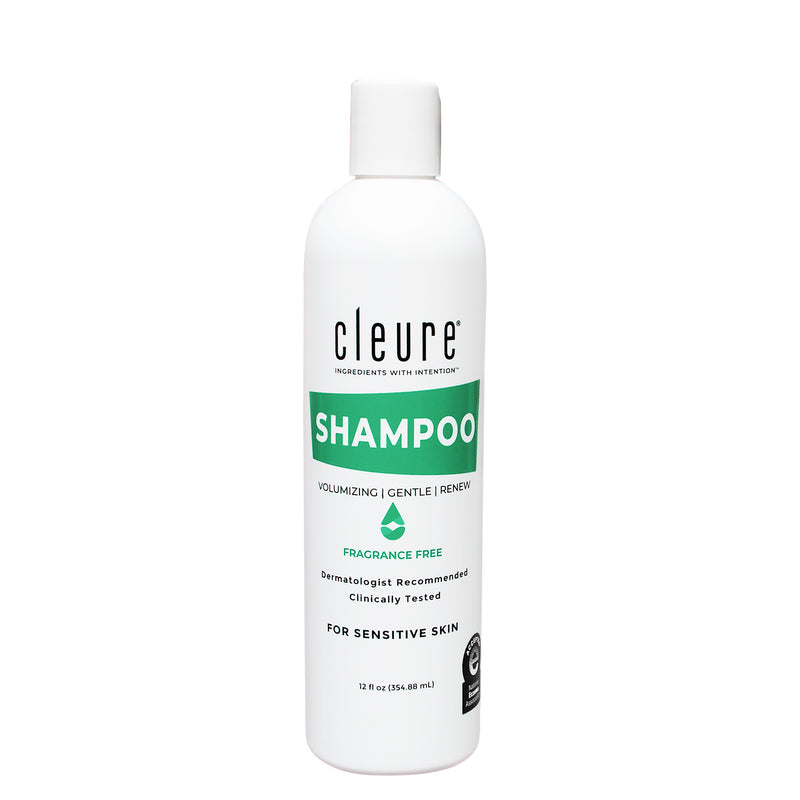
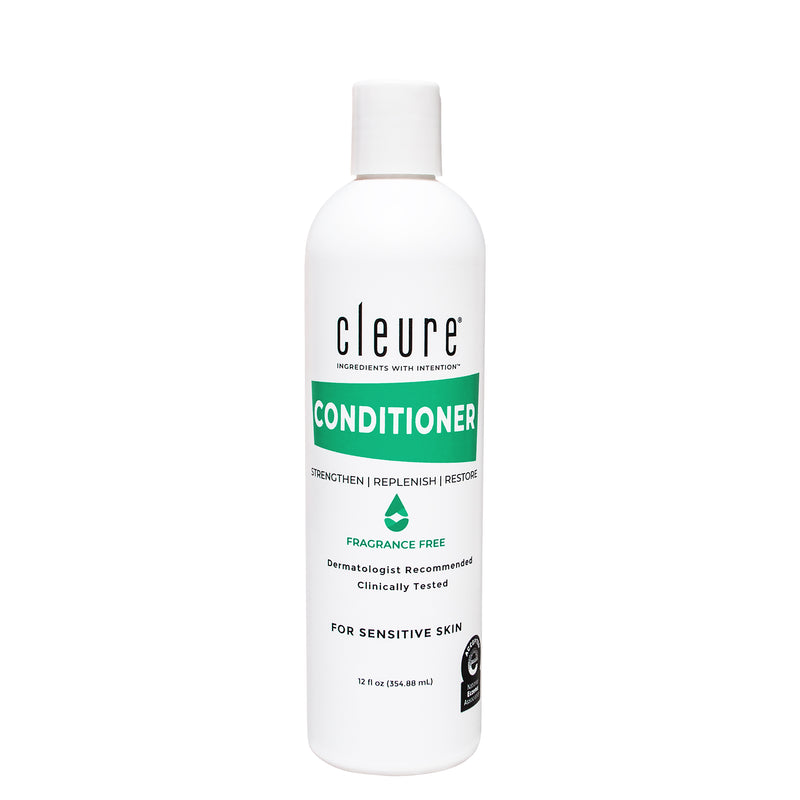
A simple, consistent routine can help keep your skin comfortable and supported. These Cleure products are formulated without fragrance, dyes or harsh irritants.
Frequently asked questions
Dandruff Questions, Answered
Dandruff is usually linked to a yeast called Malassezia that lives on everyone's scalp, and to how sensitively your scalp reacts to it. Cold, dry weather, stress, and harsh or fragranced hair products commonly make it worse.
No. Dandruff isn't contagious and isn't caused by anyone else's scalp or hair. It comes from your own scalp's reaction to a yeast everyone already has.
No. Dandruff isn't caused by being unclean. It's tied to scalp sensitivity and product choice, and washing more or less often doesn't fix it on its own.
Not exactly. Dandruff often comes with oilier flaking and mild redness, while a plain dry scalp tends to flake without excess oil. The two can look similar and sometimes overlap.
Usually not. Skipping washes lets oil and flakes build up, and harsh detergents that over-strip the scalp can trigger a rebound of even more oil and flaking. A gentle shampoo used consistently tends to help more.
SLS, fragrance, and other harsh detergents can all worsen the flaking, dryness, and redness of dandruff. Look for gentle, fragrance-free formulas instead.
No, it isn't a medicated shampoo. It's formulated without fragrance, dyes, or sulfates, and our shampoo and conditioner carry the National Eczema Association Seal of Acceptance. If flakes stick around, a dermatologist may suggest a medicated shampoo, and some people alternate it with a gentle one.
See a dermatologist if flaking is heavy, spreads to your face or ears, or your scalp becomes red, painful, or weeping. It could be seborrheic dermatitis, psoriasis, or another condition that needs a different approach.
From our blog
Related Articles
Stay in touch
Get the sensitive-skin routine guide
Sign up and we'll send a free add-on with your first order.
Sources
Cleure products are not intended to diagnose, treat, cure, or prevent any condition. Many customers with sensitive skin tell us a simpler, fragrance-free routine is easier to live with. If you have questions about Dandruff, talk with your dermatologist or physician.